Running a business that serves alcohol comes with serious responsibility. Regulators across the U.S. take alcohol server training seriously, and the consequences of skipping it can be costly.
Take Washington State, for example. A Seattle-area bar was recently cited after a server sold alcohol to a minor without holding the required Mandatory Alcohol Server Training (MAST) permit. The result included fines, mandatory retraining, and a review of the establishment’s liquor license.
This highlights a critical point: alcohol server training isn’t optional, it’s your first line of defense.
The stakes are high. According to the National Institute on Alcohol Abuse and Alcoholism, underage drinkers ages 12–20 consume about 3.4% of all alcohol in the U.S., with more than 90% consumed through binge drinking.
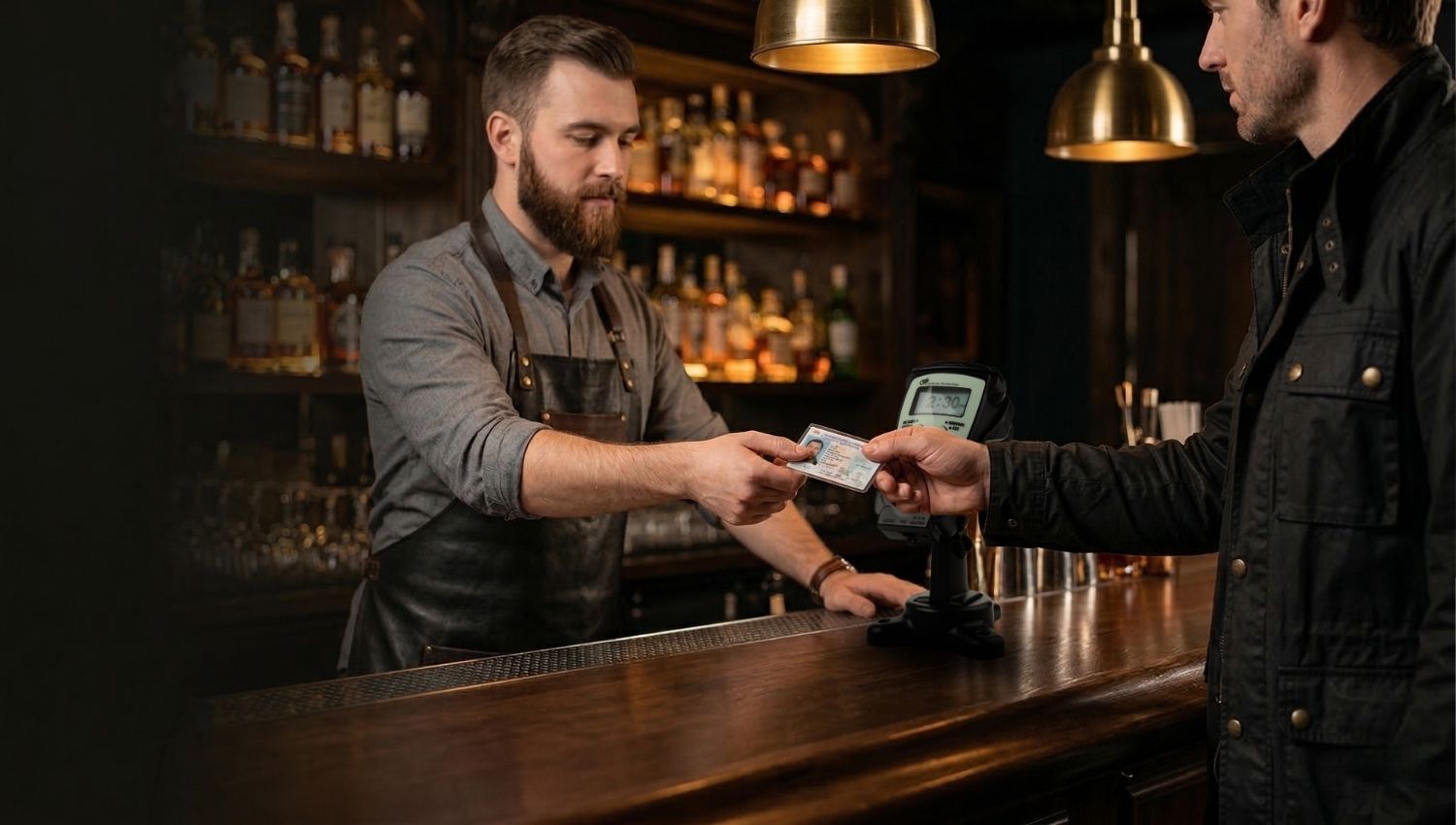
Whether you operate a nightclub, neighborhood bar, or retail liquor store, your staff needs more than good judgment. They need proof of certification and a reliable process for verifying age. State-mandated courses and tools like ID scanners, driver’s license readers, and other age verification devices help support that process.
Which States Require Alcohol Server Training
Alcohol server training is set state by state with no single federal requirement. Roughly a dozen to two dozen states either require or strongly mandate server or manager training, while many others encourage it or offer reduced penalties when staff are certified.
Many states require or strongly encourage certification, including:
- California (RBS)
- Illinois (BASSET)
- Pennsylvania (RAMP)
- Utah
- Nevada
- Oregon
Requirements change frequently, so always check your state Alcoholic Beverage Control (ABC) agency for current rules.
Takeaway: In states with mandatory training, you or your staff are typically required to complete a state-approved course within a set window after hire. In other states, training may be voluntary, but it is still strongly recommended to reduce risk and potential fines.
What’s Covered in Alcohol Server Training
Most programs (TIPS, ServSafe Alcohol, BASSET, RBS) include:
- Age verification & ID checks (how to read licenses, what to look for).
- Fake ID detection and red flags.
- Recognizing intoxication (behavioral signs, BAC basics).
- Legal responsibilities (liability, dram shop laws, who can be held responsible).
- Refusal & de-escalation techniques (how to refuse service safely).
- Recordkeeping & incident reporting (what to document).
These programs and state-approved curricula are designed to help staff make safe, consistent decisions.
How State Laws and Renewal Schedules Differ
State requirements vary in several ways:
- Is training mandatory or voluntary? Some states require it by law for all servers/managers; others only recommend it or make it optional with incentive programs.
- Who must be trained? Some states require only managers, others require all on-premises servers, or even sellers at retail.
- Timing after hire: Many states require completion within a set number of days (e.g., within 30–60 days of hire).
- Renewal frequency: Certifications most commonly last 1–3 years, with three years the most typical renewal window. For example, California requires RBS renewal every three years; Utah’s program also requires training every three years. Always verify the specific state timeframe.
Best Practice: Maintain a central training log (digital) with course name, completion date, expiration date, and employee certificates on file, as inspectors may ask for it.
ROI and Compliance Value of Driver’s License Scanners & ID Scanner for Bars
Using a quality ID scanner for bars or driver’s license scanner is both a compliance tool and an operational upgrade.
Key benefits:
Timestamped scan logs create a defensible audit trail if an underage sale is alleged.
- Fewer chargebacks & fraud losses
Linking transactions to verified IDs reduces fraudulent disputes.
Scanning is faster than manual checks during rush periods, reducing wait times and human error.
ID scanners read barcodes and magnetic stripes, catching suspicious IDs like altered, expired, or fake IDs.
Many businesses find that ID scanners pay for themselves through avoided fines, fewer incidents, and faster checkout speed.
A Note on Fake ID Detection and Compliance
While driver’s license scanners and ID scanners for bars catch some fake IDs, it’s important to understand that this doesn’t automatically make your business compliant. As fake IDs continue to improve in quality and become harder to detect, relying solely on technology can create a false sense of security—and an ongoing, costly effort to keep up.
Rather than trying to chase increasingly sophisticated fakes, it’s far more effective and legally sound to implement a clear compliance process, train your staff consistently, and document every step.
Regulators don’t evaluate compliance based on how many fake IDs you catch. Instead, they look for evidence of a structured and repeatable system, including:
- Proof of training
- Documented procedures
- Incident logs
- Renewal records
- Consistent enforcement
Even the best age-verification devices can’t guarantee compliance on their own. Spotting a fake ID may help prevent a single incident, but without proper documentation and procedures, your business could still face penalties.
In short, compliance comes from combining staff education, well-defined policies, and supporting technology—not from attempting to outpace increasingly advanced fake IDs.
Documentation: What Inspectors Expect
To demonstrate compliance, maintain:
- Employee training records (who, which course, provider, completion date, certificate)
- A renewal calendar showing upcoming expirations
- Incident logs (refused sales, intoxication removals, fake ID attempts) with date/time
- ID scanner logs with timestamps (if used)
This documentation protects your business during inspections or investigations.
Pitfalls of Storing Data in the Cloud
Many operators assume cloud storage is the safest option when using an ID scanner for bars or driver’s license scanner; however, it can introduce additional considerations that businesses should carefully evaluate.
- Privacy law considerations — Some states place limits on retaining ID data beyond immediate verification, which can affect how long information should be stored.
- Data security risks — Cloud environments can become targets for cybersecurity threats if not properly managed.
- Jurisdiction complexities — Data stored across state or international borders may create additional compliance challenges depending on where your business operates.
- Overcollection concerns — Many ID scanners and age verification devices default to storing more information than is necessary, which can increase exposure.
- Customer trust considerations — Some customers may be uncomfortable with their ID details being stored longer than expected.
Industry consultants and legal advisors often note that businesses may still be held responsible if a data breach occurs, even when third-party vendors are involved. For this reason, collecting and retaining only the data you truly need—and maintaining clear internal policies—can help reduce operational complexity and support broader compliance efforts.
Preferred Practices for Handling ID Data
- Verify locally when possible — Using an ID scanner for bars or driver’s license scanner for on-site verification can help reduce reliance on cloud storage.
- Minimize data retention — Store only what’s necessary, such as a timestamp with limited details, rather than full ID images.
- Use ASCII downloads — If exports are needed, choose simple text-based (ASCII) formats instead of full ID scans. This helps reduce the amount of personal data stored while still supporting an audit trail.
- Encrypted local databases — If retention is required, consider encrypted on-site storage with restricted access controls.
- Set clear deletion policies — Align retention timelines with applicable state guidelines and internal policies.
- Be transparent with customers — Post clear notices explaining what information is collected and how it’s used when using age verification devices.
These practices can help businesses balance operational needs with customer privacy expectations while supporting broader compliance efforts.
Practical Checklist (Quick)
- Check your state Alcoholic Beverage Control (ABC) agency to confirm whether alcohol server training is required and identify approved providers.
- Enroll staff in a recognized program (such as TIPS, ServSafe Alcohol, BASSET, or state RBS certification).
- Maintain records of training certificates and set reminders for renewals.
- Evaluate an ID scanner for bars or driver’s license scanner that reads 1D/2D barcodes and provides exportable logs; review privacy and retention settings carefully.
- Consider local verification with ASCII-based downloads instead of cloud storage to help reduce data exposure.
- Keep incident logs and scanner audit trails available for inspections.
Frequently Asked Questions (FAQs)
Do ID scanners for bars and other age verification devices replace the need for server training?
No. While these devices help detect suspicious or expired IDs and create audit logs, regulators typically require staff to complete alcohol server training programs such as TIPS, BASSET, or RBS. These tools support compliance but don’t replace training requirements.
How often do I need to renew alcohol server certification?
Renewal timelines vary by state, with many certifications lasting 2–3 years. For example, California RBS and Utah alcohol training commonly require renewal every three years. It’s best to check your state ABC website for the most current requirements.
What happens if my staff serve a minor without being certified?
Penalties vary by state but may include fines, license suspension, or other enforcement actions. Maintaining up-to-date alcohol server training can help reduce risk and demonstrate a good-faith effort toward compliance.
Is catching fake IDs enough to prove compliance?
No. Detecting fake IDs using a driver’s license scanner or other age verification devices is only one part of a broader compliance strategy.
Regulators often look for:
- Training records
- Renewal certificates
- Incident logs
- Written policies
- Consistent processes and enforcement
Even if a fake ID is identified, a lack of documentation or procedures may still present compliance challenges.
Can I store scanned ID data in the cloud?
In many cases, yes—but it may introduce additional compliance and privacy considerations. Cloud storage can create added complexity around data retention, security, and jurisdiction. For some operators, local verification using an ID scanner for bars with minimal ASCII-format downloads may be easier to manage.
Who is responsible if customer ID data is breached — the vendor or the business?
In many cases, regulators and courts may hold the business responsible rather than the vendor, even when third-party services are involved. This is why some operators choose to limit the amount of data collected and stored when using driver’s license scanner systems.
What records should I keep for an inspection?
At a minimum, businesses are often expected to maintain:
- Training certificates with completion and renewal dates
- A training log or calendar showing upcoming expirations
- Incident reports (such as refusals or confiscated IDs)
- Logs from age verification devices or an ID scanner for bars (typically timestamps with limited ID data)
Keeping organized and accessible records can help support a smoother inspection process.
Bottom line
Alcohol service compliance protects your business, license, and customers. State-mandated courses and alcohol server training help staff develop the judgment and confidence to check IDs carefully, refuse service when appropriate, and handle difficult situations professionally. At the same time, tools like an ID scanner for bars, driver’s license scanner, and other age verification devices can improve speed, accuracy, and consistency while also creating audit logs that may be useful during inspections.
Because alcohol laws vary by state, it’s important to refer to your state Alcoholic Beverage Control (ABC) agency for current requirements. Maintaining organized records—such as training certifications, renewal dates, and incident logs can support smoother inspections and demonstrate consistent processes.
When it comes to data handling, maintaining organized records and minimizing unnecessary cloud storage reduces operational complexity and costs, and potential exposure. Many operators choose to focus on local verification, minimal data retention, ASCII-format logs, and clear documentation practices as part of a broader risk management approach.
By combining trained staff, appropriate technology, and well-defined procedures, businesses can strengthen compliance efforts, build customer trust, and support long-term business success.
Free Download
Alcohol Server Training Compliance Checklist (2026 Edition)
Download our quick-reference checklist to ensure your staff stays certified and your business stays compliant.
↓ Download Free PDF |
Resources & Further Reading
Disclaimer: The information provided in this article is for general educational and informational purposes only and does not constitute legal or regulatory advice. Laws governing alcohol service, mandatory server training, ID verification, and data privacy vary significantly by state and municipality, and are subject to frequent change. Furthermore, while age verification technology (like ID scanners) is a valuable tool, its use does not guarantee absolute compliance or complete protection against sophisticated fraudulent identification. Business operators are solely responsible for ensuring their practices meet all legal standards. We strongly recommend consulting with a qualified attorney or your state's Alcoholic Beverage Control (ABC) agency for guidance specific to your business operations.